Arkreen Hardware · Product Detail

eCandle 1
The commercial-grade programmable energy node.

A 1004Wh portable energy system with an embedded ESP32, documented device control, flexible PAYGo access and optional onchain settlement.

1004Wh LFP 300W AC output Embedded ESP32 PAYGo ready
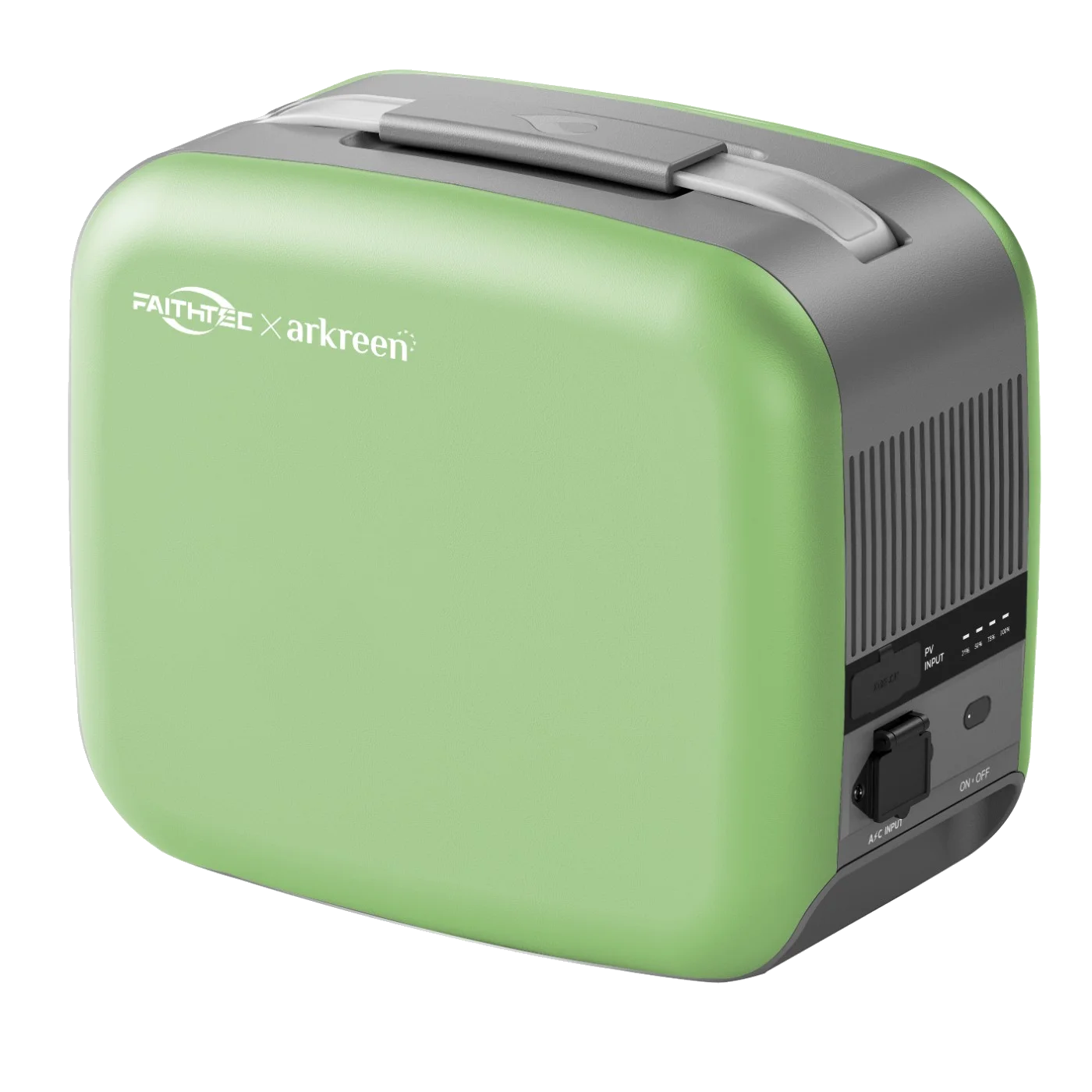
eCandle 1 portable energy node — FAITHTEC × Arkreen
Payment Authorisation ESP32 Energy output
01 · Commercial foundation

Built as a product.
Opened as a platform.

eCandle is built on a commercially manufactured portable energy system, combining a long-life LFP battery, bidirectional inverter, solar input, UPS functionality and production-grade protection systems.

Its embedded ESP32 and documented inverter interface allow developers to build new energy-access applications without designing a battery and inverter system from scratch.

  • 1LFP battery pack
  • 2Bidirectional inverter
  • 3MPPT solar input
  • 4BMS & protection
  • 5Embedded ESP32
  • 6AC / DC interfaces
  • 7Air cooling system
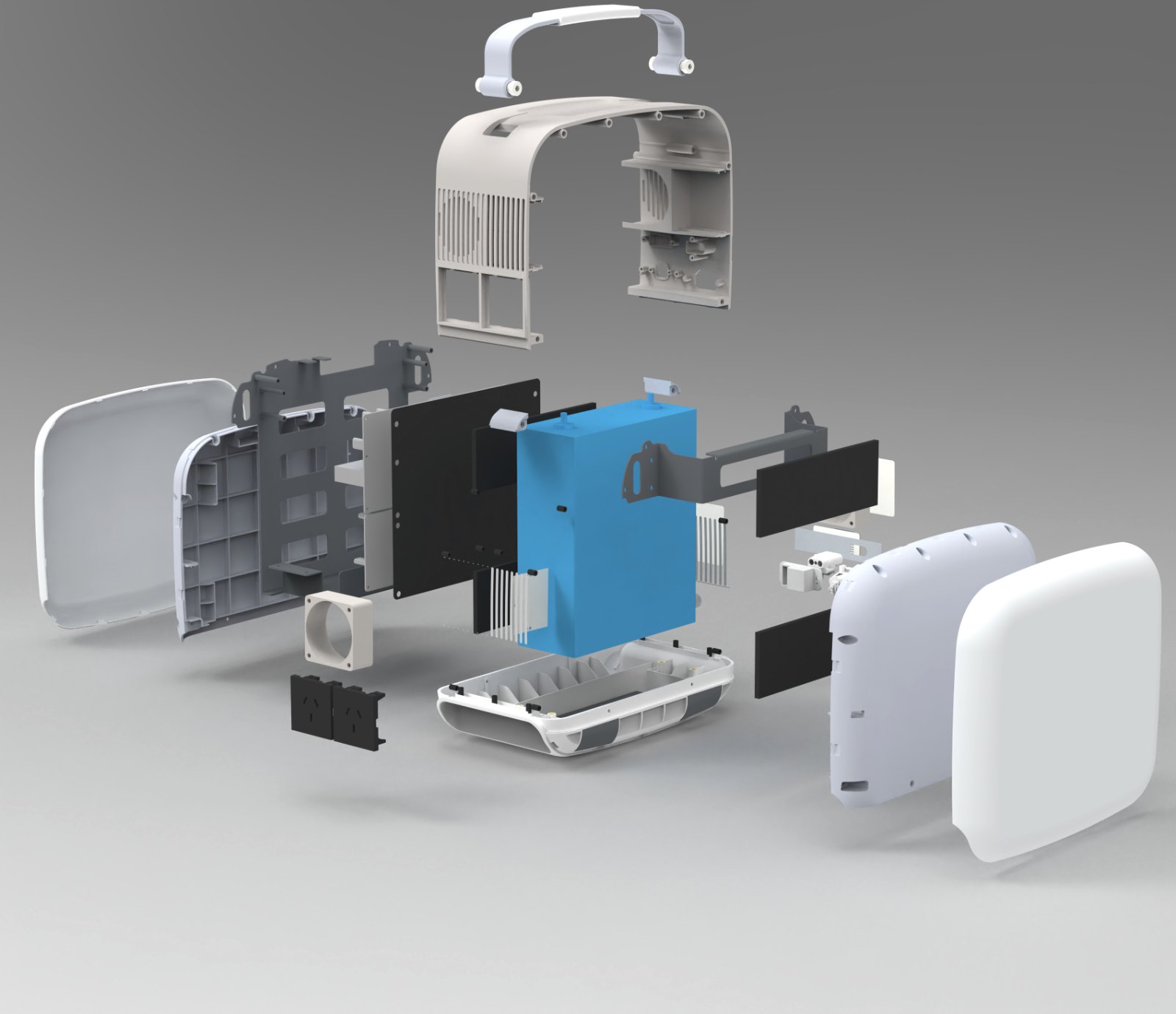
eCandle 1 exploded view — enclosure, chassis, inverter boards, battery pack, cooling and interfaces

Exploded view — eCandle 1, 1004Wh / 300W

1004Wh

LFP storage

300W

AC output

200W

PV input (max)

6,000+

Cycle life

10ms

UPS switchover

~9kg

Weight

02 · Why the ESP32 matters

A programmable layer inside the energy device.

Most commercial energy products expose only a fixed mobile app or a proprietary cloud connection. eCandle integrates an ESP32 directly into the product and provides an interface to the inverter and device-control layer.

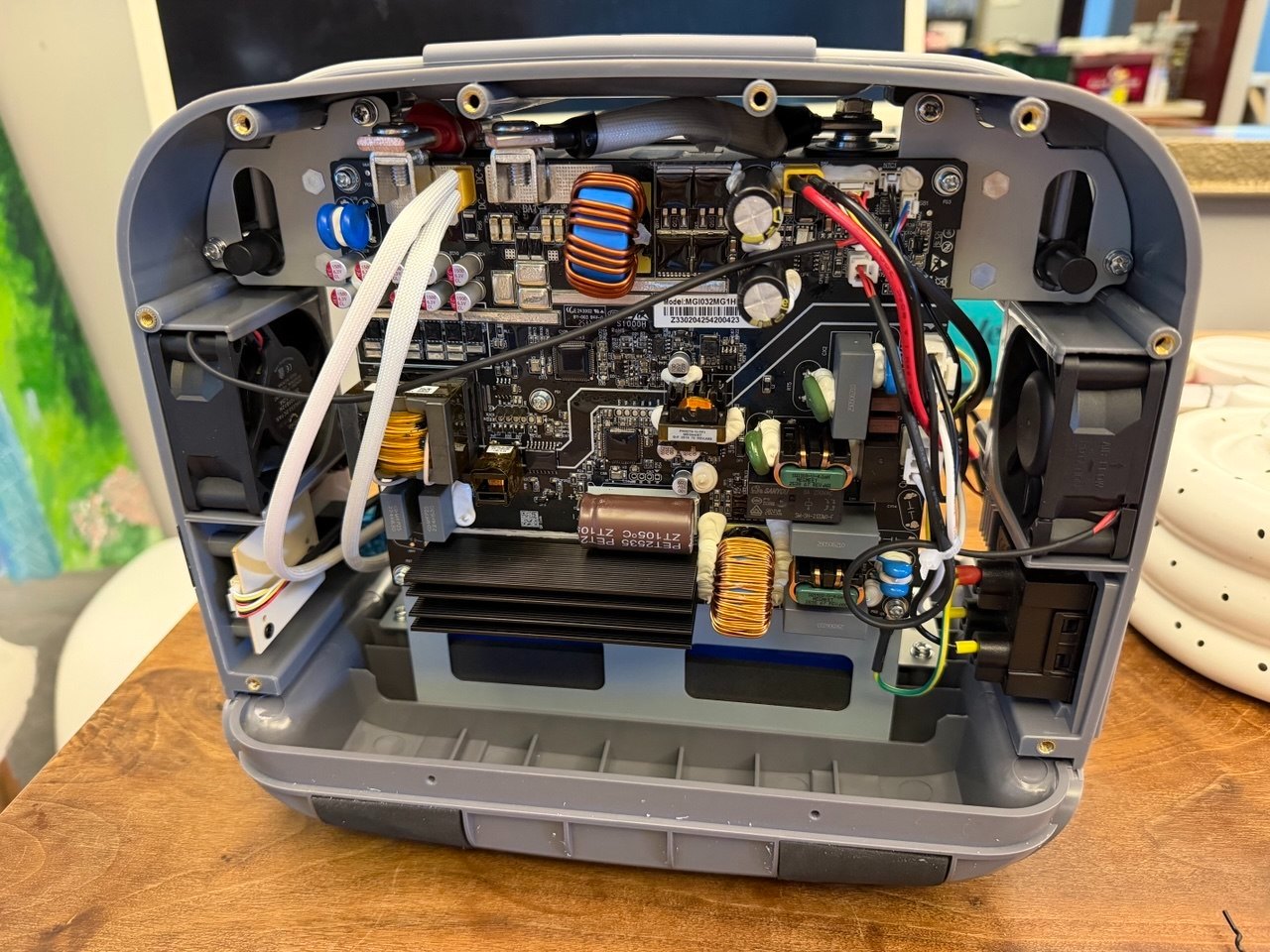
eCandle 1 with the shell removed, showing the inverter board, control electronics, heat sink and twin cooling fans

Inverter and control boards — shell removed, bench unit

The battery, BMS and inverter remain a certified, production-grade safety layer. The application layer above them is where developers work: reading state, authorising output, and running energy logic on the device itself.

Readable and controllable fields are confirmed interface by interface with the manufacturer. We publish what is verified, not what is hoped for.

Device data

Read battery state, output power, runtime status and fault information.

Output control

Control user-side energy output based on payment, operator rules or application authorisation.

Local intelligence

Keep executing local PAYGo and safety policy when the network is down.

Connectivity

BLE and Wi-Fi built in, with optional 4G expansion.

Application runtime

Run PAYGo, energy sessions, shared rental and third-party energy applications.

Secure updates

Signed OTA, device identity and production security policy.

03 · Software architecture

One device.
Multiple open energy applications.

L5

Community energy applications

PAYGo · Rental · Shared use · Productive use

L4

Payment & settlement adapters

Mobile money · Operator backend · Stablecoin

L3

eCandle open application runtime

Authorisation · Energy session · Device identity · OTA

L2

Hardware abstraction layer

Meter · Inverter · Battery · Output control

L1

Commercial eCandle hardware

1004Wh LFP · 300W inverter · MPPT · Protection

The battery and inverter remain a production-grade safety layer. The ESP32 application layer is designed to be documented, extensible and progressively opened to developers.

04 · PAYGo capability

PAYGo access, without rebuilding the device.

Working prototype

Onchain PAYGo prototype

An onchain payment or authorisation event unlocks a metered energy service on a real unit today.

Onchain payment or authorisation
ESP32 receives the access instruction
eCandle enables the authorised output
Energy service is delivered
In development

OpenPAYGO integration

OpenPAYGO will provide the standard offline access rail. Planned scope:

  • OpenPAYGO Token verification
  • Offline usage credit
  • Token counter and replay protection
  • OpenPAYGO Metrics mapping
  • BLE / Wi-Fi token transport
  • PaygOps or other compatible backend connection
  • OpenPAYGO compatibility testing

OpenPAYGO provides the standard offline access rail. Arkreen's onchain flow remains one optional payment and settlement adapter.

05 · Payment neutrality

One energy device.
Multiple ways to pay.

CashMobile moneyPaygOpsStablecoin
Payment adapter
Authorisation

eCandle

End users may continue using familiar local payment methods. Stablecoins can be used by sponsors, operators, developers or cross-border settlement partners without becoming a mandatory customer experience.

06 · Arkreen onchain layer

From device access to programmable settlement.

Device identity

Bind each eCandle to a device identity, hardware model, firmware version and operating relationship.

Payment authorisation

Onchain payment or authorisation events convert into device usage rights.

Verifiable energy records

Link payment references, device state and metering results to a single energy-service record.

Programmable settlement

Split revenue between operators, device financiers, maintenance partners and other participants by project rule.

Payment
Authorisation
Physical energy delivery
Metered energy record
Operator reporting
Optional onchain settlement

Device-originated records can be linked to transparent onchain payment and settlement events.

We deliberately do not claim that every energy record is independently verified onchain — device signing, meter calibration and renewable charging provenance each require their own trust model, and those are being built openly.

07 · Open Energy Session

A portable record of energy service.

An Energy Session connects device authorisation with the energy service actually delivered. It can support operator reporting, community energy applications, RBF workflows and optional settlement.

{
  "deviceId": "ecandle_001",
  "authorisationRef": "payment_or_paygo_ref",
  "startedAt": 1793000000,
  "endedAt": 1793007200,
  "startMeterWh": 12540,
  "endMeterWh": 12865,
  "energyDeliveredWh": 325,
  "terminationReason": "USER_STOP",
  "firmwareVersion": "0.1.0",
  "deviceSignature": "..."
}
Specification under community review

One session object is the smallest useful unit of accountability: who authorised it, how much energy actually moved, and how it ended. Everything above it — reporting, revenue splits, sponsor dashboards — is derived, not re-measured.

The schema is open for comment before it is frozen. If you operate a fleet or run a PAYGo backend, the fields you need should be in it.

08 · Use cases

What you can build.

PAYGo ownership

Weekly or monthly payments that permanently unlock the device once fully paid.

Community energy fleet

Operators manage multiple eCandle units and rent them by the hour, by the day, or by service.

Sponsor-funded access

Sponsors fund the hardware, local users keep paying in cash or mobile money, and sponsors get transparent operating reports.

Developer energy applications

Build new energy applications on a real battery, inverter, meter and device-control interface.

Productive-use energy

Manageable power for small businesses, connectivity, digital work and other low-power productive loads.

08b · Field applications

Deployed where the grid is not.

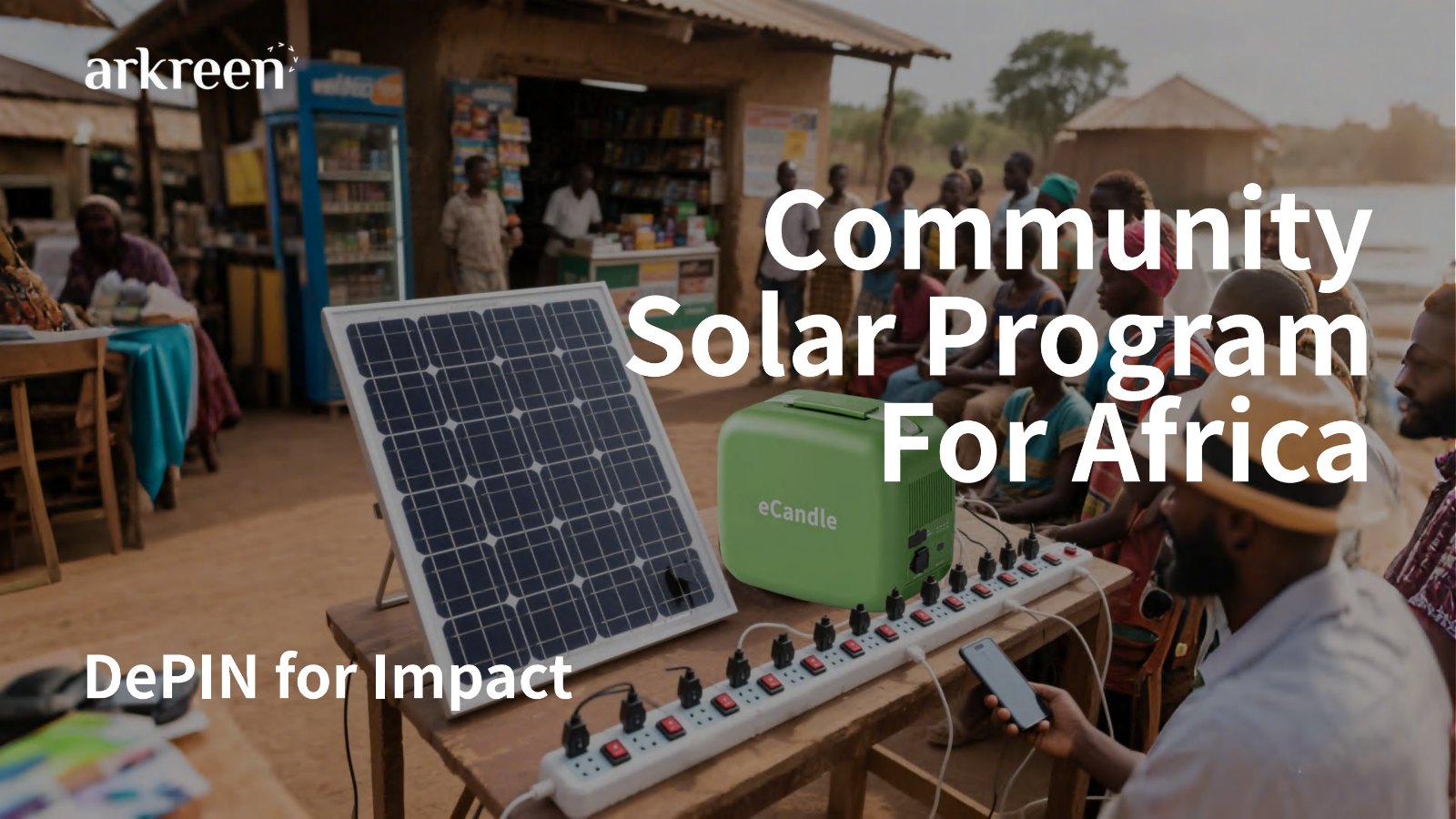
eCandle units are going into community solar programmes in Africa, where a single node serves lighting, phone charging, connectivity and small productive loads for a cluster of households.

These deployments are what the programmable layer is for: local operators need to charge for energy in the payment method their customers already use, keep working when the network drops, and report honestly to whoever funded the hardware.

Each site is an integration test for the same three things — device authorisation, metered delivery, and a settlement record an operator and a sponsor can both read.

  • Community solar programme, Africa — pilot deployment
  • Operator-run rental fleets
  • Sponsor-funded household access
  • Productive use: shops, connectivity, digital work
Community Solar Program for Africa — eCandle field deployment

Community Solar Program for Africa

09 · The open boundary

Open where developers build.
Protected where safety matters.

Developers can build at the application and integration layer without bypassing the certified battery, inverter and protection systems.

Openly programmable

Open

  • ESP32 application runtime
  • Documented device interfaces
  • Authorisation and energy session logic
  • Payment and settlement adapters
  • Operator and reporting integrations
Certified & sealed

Protected

  • Cell chemistry and BMS firmware
  • Inverter control firmware
  • Electrical protection thresholds
  • Thermal and safety cut-offs
  • Certification-bound parameters (UN38.3 / CE)

10 · Developer experience

From device to application.

01

Provision

Claim the device over BLE or a local tool.

02

Connect

Choose OpenPAYGO, an operator backend, or the onchain adapter.

03

Configure

Set time, energy credit or service rules.

04

Deploy

Ship your application to the eCandle ESP32 runtime.

05

Operate

Watch device state, energy sessions and settlement records.

11 · Product status

What is real today.

A programmable energy node is only credible if the boundary between shipped and planned is stated plainly.

Available today
  • eCandle 1 commercial hardware
  • 1004Wh LFP storage
  • 300W inverter
  • Embedded ESP32
  • Manufacturer device-control interface
  • iOS / Android application
  • Working onchain PAYGo prototype
In development
  • Open ESP32 application runtime
  • Hardware interface documentation
  • OpenPAYGO integration
  • Meter-data mapping
  • Device identity and signed session records
  • Developer SDK
Roadmap
  • PaygOps reference connector
  • Additional payment adapters
  • Operator Fleet Console
  • Compatible-device adapter framework
  • Community-developed applications

12 · Specifications

eCandle 1 — full specification.

Electrical+
Standard capacity
1004Wh
Cell chemistry
LiFePO₄
Cycle life
6,000+ cycles
AC input
90–280V · 45–65Hz · 300W max
PV input
12–60V · 200W max
AC output
110V or 220–240V regional · 50/60Hz · 300W max
USB-C
20W max
USB-A
2 ports · 10W each · 15W total
UPS switchover
10ms
Physical+
Dimensions
290 × 168 × 248 mm
Weight
≈ 9 kg
Cooling
Air-cooled
Operating temperature
−10°C to 40°C
Storage temperature
−20°C to 70°C
Altitude
0–4000 m
Humidity
10–90%, non-condensing
Connectivity & compute+
Embedded controller
ESP32
Wireless
BLE · Wi-Fi
Cellular
Optional 4G
Application
iOS / Android
Subscription
None required
Safety & certification+
Input protection
Under / over-voltage
PV protection
Under / over-voltage
Charging
Current protection
Output
Short-circuit protection
Thermal
Over-temperature protection
Certification
UN38.3 · CE

eCandle 1 is the 1004Wh / 300W configuration. A higher-output eCandle 1 Pro is planned and will be published once its specification is confirmed.

Get started

Build on a real energy device.

Developer units, interface documentation and the PAYGo demo are available to partners building energy-access applications.